Five Lessons we can Learn from Rory McIlroy
As he begins his defence of his US Masters title, I examine the lessons we can learn from his approach to golf and life.
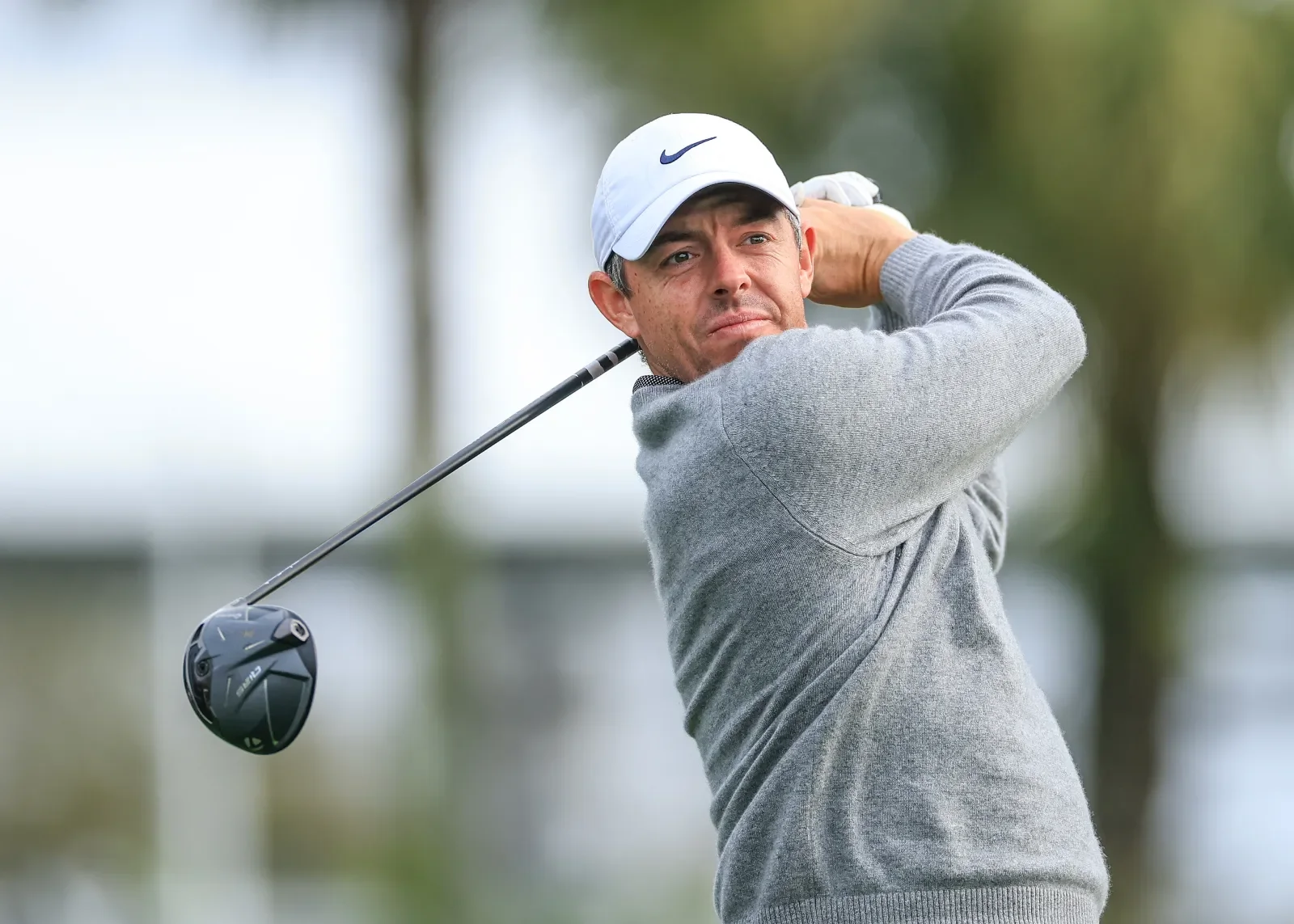
Those of you who know me know that I’m a huge sports fan and have a particular love for golf; I was even quite good at it at one point in my life. I also believe that top sportsmen and women can teach us a huge amount about life, whether that be in business or how we conduct ourselves at home. Today, Northern Ireland’s Rory McIlroy begins his defence of the US Masters at Augusta National in Georgia, USA and I think this is a great place to begin my occasional series of lessons we can learn from those at the very top of a wide variety of sports.
Rory McIlroy’s career has unfolded in full public view: child prodigy, world No. 1, major champion, heart‑breaking near‑misses, and (most recently) the completion of the career Grand Slam at the Masters. Because he has been so open about both success and struggle, his story is unusually rich in lessons for people in business and in their private lives.
Having watched Rory since he burst on the scene at a young age, I’ve been analysing his career for years and five key lessons stand out:
1. Resilience: how to lose publicly and still move forward
2. Growth mindset: keep rebuilding, even from the top
3. Perspective: redefining success around values and relationships
4. Authentic leadership: telling the truth, not the script
5. Long‑term thinking: playing the “career” game, not the “day” game
Let’s look at each of these lessons in some more detail
Resilience: how to lose publicly and still move forward
McIlroy’s most famous early failure was the 2011 US Masters. Leading after three rounds, he shot 80 on Sunday in front of a global audience. Many careers could have been psychologically broken by that kind of collapse.
Two months later, he won the U.S. Open at Congressional by eight shots.
Writers have returned to this pattern again and again. Alan Shipnuck has described McIlroy’s career as a “rollercoaster lived in HD,” but what impresses him most is how often McIlroy comes back from pain and embarrassment instead of retreating behind excuses.
McIlroy himself has repeatedly articulated a simple resilience philosophy. Speaking about his habit of staying in contention even after painful losses: “You just keep showing up. If you keep putting yourself there on Sunday, eventually it goes your way.”
Former tour pro Brad Faxon, who has worked closely with McIlroy on putting and mindset over recent times, has emphasised that the hardest thing in elite golf isn’t a single great week, but sustaining the willingness to compete hard after both wins and losses. He echoes Jack Nicklaus in saying the real test is what you do after the big emotional spikes. McIlroy has shown he will absorb the blow, do a clear‑eyed review with his team, and go back to work.
Leading golf journalist, Dan Rappaport has also highlighted this in his writing and TV work: McIlroy has taken a decade’s worth of major‑championship heartache: near‑misses at Augusta, Sunday disappointments at The Open and PGA and somehow turned them into fuel rather than scars.
Business and personal takeaway
In business, “shooting 80 on Sunday” might look like:
· A disastrous product launch
· A public PR mistake
· Being passed over for a promotion you were expected to get
In private life, it might be:
· A relationship ending badly
· Failing a critical exam
· A move or venture that simply doesn’t work out
McIlroy’s example suggests three concrete practices:
1. Face reality without sugar‑coating. He never pretends a collapse was “fine.” In post‑round interviews he’ll say, in effect, “I didn’t handle it well,” then explain why. In business, call failures what they are. That honesty is the foundation for any fix.
2. Separate identity from outcome. McIlroy’s self‑worth doesn’t rise and fall entirely with each result. That allows him to learn from bad days without feeling destroyed by them.
3. Return quickly to constructive action. After the 2011 Masters, he and his coaches analysed what went wrong, then he used that information to dominate the U.S. Open. After your own bad “Sunday,” do a short, sharp review:
· What was in my control?
· What wasn’t?
· What, specifically, will I do differently next time?
Resilience in McIlroy’s world isn’t inspirational talk; it’s a repeatable cycle of reflection and response. That same cycle underpins durable careers and healthy personal lives.
Growth mindset: keep rebuilding, even from the top
One of McIlroy’s defining qualities is his willingness to change things even when they’re “good enough.” That’s rare in any high performer. Over the years he has:
· Switched swing coaches and technical approaches
· Changed equipment deals and configurations
· Overhauled his fitness and body composition
· Re‑designed his schedule once he became a husband and father
These decisions are risky. Switching coaches or equipment when you are already a major champion can cause a short‑term performance dip. Yet, as many analysts on the Golf Channel and in outlets like Golf Digest and Golfweek have noted, McIlroy seems more interested in becoming better than in staying comfortable.
After finally winning the Masters and completing the career Grand Slam, his comments showed that same mindset. As reported by Golfweek when he returned to Augusta as defending champion, McIlroy said: “I think after you do something like that, you’ve got to make your way back down, and you’ve got to look for another mountain to climb.”
And, reflecting on his story, he told reporters (as quoted by The Guardian): “I think the story as it relates to me is ‘what do I do from now onwards?’”
He instinctively reframed the biggest achievement of his career as a pivot point, not an ending.
Journalists like Dan Rappaport have also pointed out how McIlroy’s game has evolved: adding nuance to his wedge play, working seriously on putting (historically his weakest area), and adjusting his course strategy instead of relying solely on power. All of this reflects a mindset that assumes there is always another level.
Business and personal takeaway
For organisations:
· Treat success as a staging area, not a museum piece. After a big year, major deal, or successful exit, ask McIlroy’s question: “What do we do from now onwards?”
· Build in a “post‑success review,” not just a post‑mortem on failures:
o What worked so well that we want to formalise it?
o What needs upgrading before the next phase?
For individuals:
· Periodically reinvent your strengths. Even if you’re already good at sales, coding, leadership or teaching, assume those skills will need retooling. Like McIlroy changing parts of his swing at world No. 1, you may need to unlearn and rebuild pieces of your game.
· Plan beyond the big milestone. Ahead of big life goals: promotion, house purchase, professional qualification. Ask:
o “Who do I want to become after this?”
o “What ‘next mountain’ will keep me growing?”
McIlroy’s constant evolution shows that long‑term excellence comes less from defending today’s status than from repeatedly earning tomorrow’s.
Perspective: redefining success around values and relationships
A striking shift in McIlroy in recent years has been his deeper perspective on golf’s place in his life. Fatherhood and family have changed his centre of gravity.
In Masters‑week coverage, including pieces in The Guardian and the Palm Beach Post, McIlroy spoke about his young daughter and his father, Gerry. Talking about playing practice rounds at Augusta with his dad, he said: “Every time I get to play golf with my dad, it’s a blessing.”
That’s not the voice of a man whose identity stands or falls purely on his scorecard. It reveals a broader definition of what “matters.”
Reflecting on how it felt to return to Augusta as defending Masters champion, he admitted: “For the past 17 years I just could not wait for the tournament to start. And this year I wouldn’t care if it never did.”
He immediately clarified that this didn’t mean he wasn’t motivated. He doesn’t feel “any less motivated to go out there and play well and try to win the tournament,” but he is “a lot more relaxed about it.”
The long‑pursued Masters victory had lifted a mental burden. As Golfweek reported, McIlroy said it felt like: “a big weight off my shoulders.”
He also noted that fans had shifted from asking, “When are you going to do this?” to talking about him potentially going back‑to‑back. His key line: “I know that I can do it now, so that should make it a little easier for me to go out and play the golf I want to play.”
Journalists, including Dan Rappaport, have observed how this change in perspective, grounded in family life and in having “proved” to himself that he could win at Augusta, has made McIlroy at once more relaxed and still fiercely competitive.
Business and personal takeaway
Two big lessons stand out for people in demanding careers:
1. External trophies can’t be your only foundation. Whether your “Masters” is a title, bank balance, or public recognition, it cannot be your sole source of identity. If it is, you’ll either:
· Feel crushed if you don’t get it, or
· Feel disturbingly empty if you do.
2. Relationships stabilise performance. Because McIlroy now sees time with his daughter and father as “blessings” equal to, or greater than, trophies; no single tournament can define him. That reduces fear and pressure, which ironically helps him play better.
Practical applications:
· Name your non‑negotiables. Decide what truly matters besides work; family, health, service, creativity and design your schedule to protect them. You can’t “fit in” what you treat as optional.
· Use success to create space, not more pressure. When you achieve a major goal, ask: “How can I use this to buy more time and presence with the people and pursuits I value?” McIlroy using his Masters win to relax and enjoy golf more is a good model.
In short, he shows that success is more sustainable—and more enjoyable—when it is held within the larger frame of a meaningful life.
Authentic leadership: telling the truth, not the script
If there is one trait that journalists and peers consistently mention about Rory McIlroy, it’s his candour. In an era of media‑trained answers, he is unusually willing to:
· Express genuine opinions on controversial issues in golf (this has got him into trouble from time to time but, so what?)
· Admit to nerves, doubt, burnout or disappointment
· Reflect publicly on his own growth and misjudgements
Writers like Ewan Murray in The Guardian and broadcasters like Dan Rappaport have repeatedly highlighted that McIlroy often acts as the “conscience” or “voice” of the modern PGA Tour because he’s willing to say what others think but won’t articulate.
This authenticity is not without cost. McIlroy has had:
· Tense exchanges with journalists (including a notorious “f off” directed at writer Alan Shipnuck, which Shipnuck later said McIlroy regretted)
· Public disagreements with fellow professionals during the tumultuous years of the PGA–LIV split
Yet his willingness to later say, in effect, “I didn’t handle that well” shows another dimension: he is not just frank; he’s capable of self‑correction.
Coaches and team‑room colleagues at Ryder Cups have often described him as an emotionally open leader; someone who will cry after a loss, take responsibility, and then rally others. When Europe lost heavily at Whistling Straits in the USA, McIlroy was in tears in the TV interview. Later, when Europe won at Marco Simone in Italy, that vulnerability made the joy feel deeper and more authentic.
Leadership research often shows that people follow leaders they perceive as real and consistent more readily than those who are perfectly polished. McIlroy fits that pattern; players and fans may not always agree with him, but they rarely doubt that he believes what he’s saying.
Business and personal takeaway
At work:
· Explain decisions in plain language. When McIlroy talks about his game or the state of golf, he avoids jargon. Leaders can emulate this by replacing corporate buzzwords with clear reasoning people can understand.
· Own your feelings and your role. Saying “I’m disappointed in this quarter; here’s where I misjudged things, and here’s what I’ll do differently” earns more trust than spin.
In your private life:
· Be congruent. Align what you say with what you actually believe and do. Friends, partners and children can tell when you’re hiding behind a script.
· Repair when you misstep. If you snap in an argument or make a poor call, follow McIlroy’s pattern with Shipnuck: accept that you handled it badly, apologise, and behave differently next time. We all make mistakes.
A simple practice for “McIlroy‑style” authenticity:
Before a tough conversation, at work or at home, answer these two questions on paper:
1. What is the honest core of what I need to say?
2. How can I say that with as much respect and clarity as possible?
Sticking to that core builds a reputation for straight dealing, which is an enormous long‑term asset in any field.
Long‑term thinking: playing the “career” game, not the “day” game
Golf, like business and life, is a long game made up of many short ones. McIlroy has increasingly learned to see himself as playing the longest game of all: his career and life, not just today’s round or this season.
When he returned to Augusta as Masters champion, his comment, reported by The Guardian and others, that for 17 years he “could not wait for the tournament to start” but now “wouldn’t care if it never did” was revealing. It didn’t mean he no longer cared about the Masters; it meant the burden of a single, all‑defining goal had lifted.
Similarly, when he said, via Golfweek: “I know that I can do it now, so that should make it a little easier for me to go out and play the golf I want to play,” he was describing a shift from outcome obsession to process focus. Once you know you’re capable, you don’t have to grip so tightly.
Analysts, including Dan Rappaport, often point to McIlroy’s underlying metrics; driving, ball‑striking, strokes‑gained as evidence that he is always around the top. He doesn’t win every week or every major, but he gives himself many chances. Over a career, that is how probabilities work in your favour.
Coaches like Brad Faxon also emphasise that when they work with McIlroy, they don’t chase instant fixes so much as build habits that will hold up over years. That’s true in putting strokes, but it applies equally to decision‑making and emotional regulation.
Business and personal takeaway
For organisations:
· Optimise systems, not headlines. Focus on building pipelines, processes, and cultures that create consistent opportunities: good products, strong customer relationships, adaptable teams. Not every product or campaign will be a hit, but the system will keep delivering chances to win.
· Avoid overreacting to short‑term noise. One bad month, quarter, or PR cycle is like a bad nine holes. Review and adjust, but don’t abandon a fundamentally sound strategy because of one wobble.
For individuals:
· Think in seasons and arcs. A bad week at work, a slow year, or even a misjudged job move doesn’t define your whole career. Ask:
o Am I generally moving toward more skill, more integrity, and more alignment with my values?
o What story will this look like in five years?
· Make five‑year‑smart decisions. Before big choices, use questions borrowed from McIlroy’s long‑term orientation:
o “If this were written about me in five years, would I be proud of it?”
o “Does this move fit the kind of person and professional I’m trying to become?”
By mentally expanding the time frame, you reduce the pressure on any single day to be perfect. That’s exactly what has happened with McIlroy: once the Masters stopped being a “career verdict” and became “one chapter” in a longer story, he could finally win it… and enjoy it.
Bringing the five lessons together
From Rory McIlroy’s very public journey, five interlocking lessons emerge for people in business and in their private lives:
1. Resilience – You will fail in front of others if you aim high. The crucial question is whether you keep “showing up,” learning and trying again.
2. Growth mindset – Even from the top, keep asking “What’s the next mountain?” and be willing to change what’s already working to reach it.
3. Perspective – Let family, relationships and meaning widen your definition of success so that no single result controls your identity.
4. Authenticity – Speak plainly, own your views and your mistakes, and accept that being believed is more important than being universally liked.
5. Long‑term thinking – See your career and life as a multi‑chapter story; build habits and systems that will serve you not just this quarter, but for years.
McIlroy’s own reflections at Augusta distil the shift that many people eventually need to make. For years, his story was framed around a “what if?”—what if he never won the Masters? Once that question became “what now?” he was free to think, live and play differently. After his victory last year, he immediately talked about his newfound freedom telling a TV interviewer, “I’m playing with house money now.”
In business and in life, moving from “What if I fail?” to “What will I build next?” is precisely the pivot that separates short, intense bursts of success from sustained, meaningful achievement.