Artificial Intelligence and the Environment
The blogosphere is filled with people singing the virtues of Artificial Intelligence, selling courses, giving advice and of course pretending they didn’t use it to write their last article. However, I’ve seen very little on here about the impact AI is having on the environment so I thought that was worth discussing alongside all the positives.
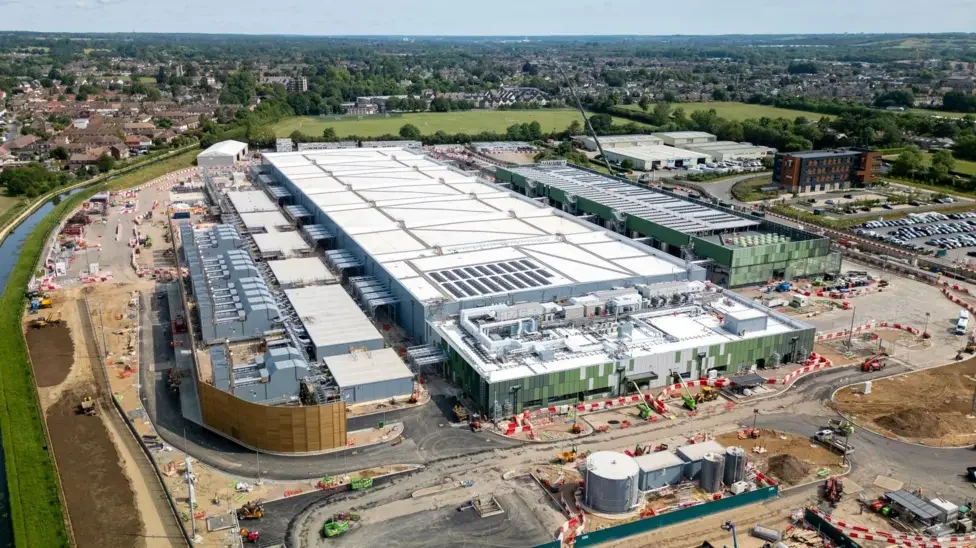
Artificial intelligence depends on a sprawling physical infrastructure of data centres, networks, and devices whose environmental costs are only starting to be openly discussed. These impacts extend well beyond the abstract “cloud” and into very tangible demands for electricity, water, land, and minerals.
A growing body of work in academia and policy has framed this as a serious, if still poorly measured, environmental issue. At a recent panel hosted by New York University’s Institute for Public Knowledge, media scholar Benedetta Brevini noted that “the unprecedented increase in energy and water consumption driven by the rise of generative AI has made it nearly impossible for the industry to continue avoiding this draconian problem.” The panel’s focus was not only on data‑centre footprints but on how “communication, data capitalism and the climate emergency” are now tightly intertwined.
Electricity use is one of the most visible pressures. Training and running large neural networks requires vast computing power concentrated in data centres. Industry estimates synthesised by analysts suggest that by 2024, AI workloads could account for roughly 15–20% of total data‑centre energy consumption worldwide. As AI adoption accelerates, this creates a risk that, without rapid decarbonisation of power grids, AI expansion will lock in substantial additional greenhouse‑gas emissions.
The Digital Decarb Design Group at Loughborough University in the UK produced the Data Doomsday which predicts that by 2033, there may not be enough global electricity produced to power all the data centres in the world. “Something has to give.”
The big tech companies know their need is growing. Microsoft has signed a deal to restart the infamous Three Mile Island Nuclear Generating Station (the location of one of America’s worst nuclear accidents). Amazon are investing in a new generation of small, modular nuclear power stations.
Some critics argue these fears are overstated, pointing out that many headline figures are extrapolated from early, less efficient models and that markets can drive efficiency and substitution. But even sceptical economic commentators concede that “LLM models do use considerable amounts of electricity,” and that their demand is set to rise with scale.
Water is a second, less visible but increasingly contentious cost. Data centres need water both directly, for cooling, and indirectly, through the water used at power plants. Analyst Sergey Tereshkin collates expert estimates suggesting that AI systems alone consumed between 312 and 765 billion litres of water up to the end of 2025. Corporate disclosures hint at how quickly this burden is growing: after the launch of large‑scale generative AI services, Microsoft reported that global water consumption by its data centres surged by 34% in 2022, to around 6.4 billion litres, while Google reported a 20% year‑on‑year increase in its data‑centre water use. Yet, as Tereshkin notes, the true picture remains opaque; Google has explicitly acknowledged that it does not include water used at third‑party power plants in its figures. This lack of transparency has prompted experts to call for “stringent reporting standards” and mandatory disclosure of energy and water use specifically attributable to AI workloads.
“For every chat GPT query you make, it takes one pint of water to cool the system”. Professor Tom Jackson, Loughborough University
Beyond operational electricity and water use, AI’s environmental footprint extends across the whole supply chain. The chips that power modern AI are built on intensive mining and processing of metals and rare earths, with associated habitat disruption, pollution, and local water stress. The global network of fibre‑optic cables, undersea links, and edge infrastructure depends on concrete, steel, and plastics, along with the energy to manufacture and maintain them. Scholars such as Nicole Starosielski, whose work traces “the subsea cables that carry almost 100% of transoceanic internet traffic,” have shown how digital systems tie remote ecologies into a single extractive infrastructure. From this vantage point, AI is not an ethereal intelligence but another accelerating layer of demand on already strained material systems.
High‑profile figures within the tech industry have begun to acknowledge these tensions. Microsoft’s Brad Smith has warned publicly that, in the rush to scale up AI, “we have to recognise we’re placing new pressures on energy systems and water resources,” arguing that without careful planning, AI could “compete with communities for limited water in regions already facing drought.” Environmental researchers working with companies like Intel and the Green Software Foundation, such as Tamara Kneese, have similarly stressed that if AI continues to expand on its current trajectory, efficiency gains alone are unlikely to offset absolute growth in resource use.
There are, however, credible pathways to reduce harm. Studies brought together by analysts such as Tereshkin show that careful siting of data centres, improved cooling technologies, and using low‑carbon, low‑water electricity can cut both water and carbon footprints by 70–85%. Proposals from environmental and policy experts converge on several priorities: transitioning data centres to renewable or otherwise low‑carbon power; investing in more efficient chips and software; building water‑reuse and dry‑cooling systems into new facilities; and, crucially, enforcing transparency and accountability over AI‑related energy and water use, which is currently a world of opacity. Without such measures, the growth of AI risks deepening the climate and ecological crises it is sometimes advertised as helping to solve. With them, it may be possible to constrain AI within planetary boundaries but only if environmental costs are treated as central design constraints rather than an afterthought.
In a world where resources are already scarce, with temperatures and sea levels rising, AI’s true costs have the potential to shape geopolitics in ways that global leaders need to consider before it’s too late.